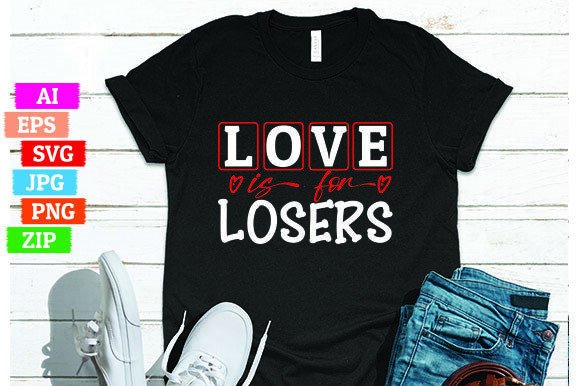
Love Is for Losers: Deconstructing Cynicism and Finding Value in Modern Connection
The phrase "love is for losers" has permeated pop culture, internet memes, and casual conversation as a shorthand for emotional detachment. On the surface, it appears to be a declaration of independence—a rejection of vulnerability in favor of self-preservation. However, for general readers seeking to understand human behavior, relationships, and personal growth, this sentiment requires a deeper analysis. Rather than accepting it as an absolute truth or dismissing it as mere teenage angst, we must explore what this philosophy represents, why it resonates in the modern era, and how to distinguish between healthy autonomy and defensive cynicism.
Understanding this topic is not about validating bitterness; it is about recognizing the protective mechanisms people use to navigate a complex social landscape. Whether applied to dating, business networking, or creative collaboration, the tension between connection and self-reliance defines much of our contemporary experience. This article explores the origins, utility, and limitations of this mindset, offering a balanced perspective for those trying to make sense of modern relationships.
The Origins and Cultural Context of Emotional Detachment
To understand why the idea that love is detrimental gains traction, we must first look at the cultural soil from which it grows. Historically, romantic idealism was the dominant narrative. However, the digital age has introduced a counter-narrative driven by several key factors:
- Algorithmic Dating Fatigue: Modern dating apps often gamify human connection, leading to burnout. When interactions feel transactional, rejecting the premise of "love" becomes a rational response to a flawed system.
- Economic Individualism: In a competitive global economy, time spent on emotional maintenance is sometimes viewed as an opportunity cost. The "hustle culture" mentality often frames deep interpersonal bonds as distractions from professional success.
- Media Representation: From punk rock anthems to viral TikTok trends, media has long celebrated the anti-hero who succeeds precisely because they refuse to be tethered by affection.
This context matters because it shifts the conversation from personal failure to systemic adaptation. When someone adopts the stance that emotional attachment is a liability, they are often responding to an environment that makes vulnerability feel unsafe or unrewarded. Recognizing this helps us approach the topic with empathy rather than judgment.
Distinguishing Autonomy from Avoidance
A critical misunderstanding arises when individuals conflate self-sufficiency with emotional avoidance. While the phrase suggests a binary choice between loving and winning, psychological research suggests a spectrum. Healthy autonomy involves maintaining one’s identity and goals within relationships, whereas avoidance involves suppressing needs to prevent perceived pain.
For beginners exploring this concept, it is helpful to view "love is for losers" not as a lifestyle prescription, but as a symptom. It often signals a need for boundaries rather than a permanent rejection of intimacy. In educational and therapeutic settings, distinguishing these two states is the first step toward building resilience that does not require isolation.
Practical Relevance in Work, Business, and Creativity
While primarily associated with romance, the philosophy of strategic detachment has significant implications for professional and creative life. Understanding how to balance passion with objectivity is a valuable skill in multiple domains.
Business and Professional Boundaries
In the corporate world, the adage is frequently reinterpreted as "don't mix business with pleasure." This is not necessarily about being cold; it is about risk management. Leaders and entrepreneurs often adopt a form of pragmatic detachment to make objective decisions that emotional entanglement might cloud.
- Negotiation Leverage: Entering a negotiation without desperate attachment to a specific outcome often yields better results. This mirrors the core tenet of the philosophy: caring less can paradoxically increase effectiveness.
- Conflict Resolution: Detaching from personal ego allows professionals to address issues based on facts and organizational goals rather than hurt feelings.
- Burnout Prevention: By compartmentalizing work relationships, individuals can maintain professional warmth without absorbing the emotional weight of every interaction.
However, experienced professionals know that total detachment is unsustainable. Trust, loyalty, and psychological safety are economic assets. The practical application here is calibrated engagement—caring enough to be effective, but retaining enough distance to remain resilient.
Creativity and Artistic Expression
Artists and creators have long utilized the "tortured loner" archetype, but the reality of creative work is more nuanced. Many creators adopt a cynical persona as a shield against criticism. If you convince yourself that external validation (and the love that comes with it) is irrelevant, negative feedback loses its sting.
Yet, the most enduring creative works often stem from profound connection. The challenge for modern creatives is to use the energy of defiance without succumbing to the isolation of nihilism. Technology platforms amplify this tension; creators must build parasocial relationships with audiences while protecting their private selves. Understanding this dynamic is essential for anyone navigating the creator economy.
Common Misunderstandings and Semantic Nuances
When discussing this topic, semantic precision prevents confusion. Search intent around this phrase often includes users looking for song lyrics, movie references, or genuine relationship advice. Addressing these variations builds a broader understanding.
Misconception 1: It is exclusively about romance.
While rooted in relationship discourse, the phrase applies to any high-stakes emotional investment. Fans of sports teams, political movements, or brands often express similar sentiments after disappointment. The underlying mechanism is the same: managing expectations to mitigate loss.
Misconception 2: Cynicism equals strength.
Cultural narratives often frame emotional unavailability as power. However, psychologists note that rigid defensiveness is often fragile. True strength involves the flexibility to be open when safe and guarded when necessary. The "winner" in this equation is not the one who feels nothing, but the one who regulates feeling effectively.
Misconception 3: It is a permanent identity.
For many, this mindset is situational. A student focusing on exams, an entrepreneur launching a startup, or someone healing from grief may temporarily adopt this stance. Treating it as a fixed personality trait ignores the fluid nature of human development.
Integrating Understanding into Daily Life
How does one apply this understanding constructively? Whether you are a student, a professional, or simply navigating modern social dynamics, the goal is integration rather than elimination of emotion.
First, practice intentional prioritization. Instead of rejecting love or connection wholesale, audit where your emotional investments yield returns versus where they drain resources. This aligns with productivity methodologies like Essentialism, applied to the heart.
Second, leverage technology mindfully. Social media algorithms often promote extreme viewpoints because they drive engagement. Curating feeds to include perspectives on secure attachment and emotional intelligence provides a counterbalance to cynical content. Digital literacy is now a component of emotional literacy.
Finally, reframe the vocabulary. Instead of "love is for losers," consider "boundaries are for longevity." This semantic shift retains the protective benefit of the original phrase while removing the self-defeating negativity. It acknowledges that self-preservation is valid without devaluing human connection.
Conclusion: Beyond the Binary
The statement "love is for losers" serves as a fascinating cultural artifact, revealing much about our collective anxieties regarding vulnerability, success, and worth. For the general reader, the value lies not in adopting the slogan, but in decoding it. It highlights the very real need for self-protection in an overwhelming world while warning against the hollowness of total isolation.
By exploring this topic through the lenses of psychology, business, and culture, we move beyond simple judgments. We see that the desire to detach is often a search for safety, and that true success—whether in love, work, or creativity—usually requires a sophisticated balance of openness and armor. Understanding this balance is the ultimate win, transforming a cynical catchphrase into a starting point for deeper self-awareness and more resilient connections.