Evaluating Dragonfly Clipart for Creative and Educational Projects
Dragonfly clipart represents a specific category of digital illustration focused on the anatomical or stylized depiction of dragonflies. These visual assets range from scientifically accurate vector diagrams to whimsical, cartoon-style renderings designed for younger audiences. For designers, educators, and content creators, selecting the appropriate dragonfly imagery requires understanding the distinctions between artistic interpretation and biological accuracy, as well as navigating licensing frameworks. This evaluation guide explores the functional applications, technical considerations, and decision-making factors necessary to determine if this specific type of clipart aligns with your project goals.
Defining the Scope of Dragonfly Imagery
When researching dragonfly clipart, it is essential to recognize that the term encompasses diverse visual styles. Unlike general insect illustrations, dragonfly art often carries specific symbolic weight or scientific requirements. The available assets typically fall into three distinct categories:
- Scientific Illustration: These images prioritize anatomical correctness, detailing wing venation, compound eye structure, and thorax segmentation. They are often rendered in black and white line art or muted watercolors to serve educational purposes without distracting embellishments.
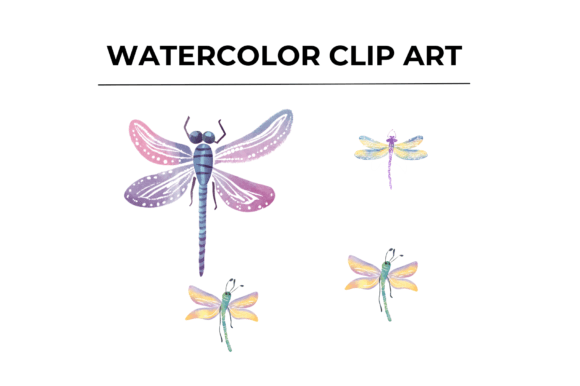
- Decorative and Stylized: Focusing on aesthetics over accuracy, these designs feature exaggerated colors, simplified shapes, and artistic flourishes. They are commonly used in greeting cards, nursery decor, and branding where the dragonfly serves as a symbol of transformation or lightness rather than a biological subject.
- Silhouette and Iconography: Minimalist representations used for user interfaces, wayfinding signage, or subtle background textures. These prioritize readability at small sizes and often lack internal detail.
Understanding which category your project requires prevents the common error of selecting aesthetically pleasing but contextually inappropriate imagery. A biology textbook utilizing cartoon dragonflies undermines credibility, just as a children’s party invitation featuring hyper-realistic anatomical drawings may feel too clinical.
Primary Use Cases and Functional Fit
The decision to utilize dragonfly clipart should be driven by specific functional needs rather than general decoration. Evaluating the asset against intended use cases helps ensure relevance and effectiveness.
Educational and Scientific Communication
In academic settings, dragonfly clipart serves as a vital teaching aid. Odonates (the order containing dragonflies and damselflies) are frequently used to teach concepts of metamorphosis, aquatic ecosystems, and flight mechanics. High-quality educational clipart must accurately distinguish dragonflies from damselflies, particularly regarding wing positioning at rest and eye placement. If the resource cannot clearly differentiate these features, it fails its primary educational objective regardless of its artistic merit.
Branding and Symbolic Design
For commercial and personal branding, dragonflies are often selected for their cultural associations with change, adaptability, and emotional depth. In this context, the clipart functions as a visual metaphor. Designers evaluating assets for branding should prioritize scalability and versatility. Vector-based clipart is superior here, as it allows for color manipulation and resizing without degradation, ensuring the symbol remains consistent across business cards, websites, and large-format prints.
Crafting and Personal Projects
Hobbyists and crafters represent a significant user base for this niche. Applications include scrapbooking, textile printing, and vinyl cutting. For these users, file compatibility is the primary evaluation metric. Silhouette and Cricut users require clean SVG files with closed paths and minimal nodes, whereas digital scrapbookers may prefer high-resolution PNGs with transparent backgrounds. Assessing the technical specifications of the clipart against your hardware or software limitations is a critical step in the selection process.
Technical Considerations and Quality Assessment
Beyond style and symbolism, the technical quality of dragonfly clipart dictates its long-term utility. Several factors warrant close inspection before acquisition or download.
Resolution and Format Integrity: Raster images (JPEG, PNG) must be evaluated for resolution adequacy. For print projects, a minimum of 300 DPI at the intended physical size is standard. Upscaling low-resolution dragonfly wings often results in pixelation that destroys the delicate texture essential to the subject. Vector formats (SVG, EPS, AI) are generally preferable for complex organic shapes like insect wings because they maintain crisp edges indefinitely.
Anatomical Accuracy vs. Artistic License: Even in non-scientific projects, basic anatomical plausibility matters. Poorly drawn dragonflies may have incorrect wing counts, symmetrical patterns that do not exist in nature, or body proportions that resemble other insects. While stylization is acceptable, structural errors can make an image look unprofessional or "AI-generated" in a negative sense. Reviewing the portfolio of the creator or the source repository for consistency in quality helps mitigate this risk.
Transparency and Layering: Effective clipart must integrate seamlessly into existing layouts. Assets with jagged edges, white boxes, or incomplete transparency masks increase post-processing time. Evaluating the alpha channel quality of PNG files or the path cleanliness of SVG files saves significant editing effort downstream.
Licensing and Ethical Usage
A critical component of evaluating any digital asset is understanding the rights associated with it. Dragonfly clipart is widely available across free and premium platforms, but availability does not equate to unrestricted usage.
Commercial vs. Personal Licenses: Many free resources restrict usage to personal projects. If you intend to sell products featuring the dragonfly design, create merchandise, or use it in client work, a commercial license is mandatory. Premium marketplaces typically offer tiered licensing; verifying that your intended volume and distribution method fall within the purchased tier protects against legal liability.
Attribution Requirements: Creative Commons and similar open licenses often require attribution. In professional design contexts, providing visible credit may not be feasible. Evaluating whether you can practically comply with attribution terms is as important as the license itself. Paid assets often waive attribution requirements, offering a streamlined workflow for commercial designers.
Originality and Exclusivity: Widely distributed free clipart carries the risk of ubiquity. If brand differentiation is a goal, using generic dragonfly imagery found on multiple stock sites may dilute your visual identity. Commissioning custom artwork or purchasing exclusive rights to premium assets ensures uniqueness, though at a higher cost.
When to Consider Alternatives
While dragonfly clipart is versatile, it is not always the optimal solution. Recognizing when to pivot to alternative visual strategies demonstrates mature design judgment.
Photography for Emotional Resonance: Clipart inherently abstracts reality. If the goal is to convey the iridescence of wings, the texture of water, or the behavior of dragonflies in their natural habitat, photography is superior. Illustrations struggle to replicate the complex light interactions that define dragonfly aesthetics in real-world environments.
Custom Illustration for Specific Species: Generic clipart rarely depicts specific regional species accurately. If a project focuses on local conservation efforts or requires identification-level precision, stock clipart will likely be insufficient. Commissioning a scientific illustrator ensures taxonomic accuracy that pre-made assets cannot guarantee.
Abstract Patterns for Backgrounds: When dragonflies are intended solely as textural elements rather than focal points, dedicated pattern designs often perform better than scattered clipart. Seamless patterns provide uniform coverage and visual rhythm that individual placed images cannot achieve efficiently.
Making the Final Selection
Selecting the right dragonfly clipart involves balancing aesthetic preference with practical constraints. Create a checklist based on your specific project parameters: Does the style match the tone? Is the format compatible with your output medium? Does the license cover your intended use? Is the anatomical representation appropriate for your audience?
By approaching dragonfly clipart as a functional tool rather than mere decoration, you ensure that the visual assets enhance rather than detract from your communication goals. Whether for scientific education, commercial branding, or personal expression, informed evaluation leads to more effective and legally sound creative outcomes. Take time to compare multiple sources, test files in your working environment, and verify licensing terms before committing to a final selection.